The builder's own engineering
We are the manufacturer's own U.S. representative, so the engineering answers come from the people who build the machine and you reach them through one number.

Lico DEL Series ripsaw lines scan every board and cut a unique saw pattern for it, recovering lumber a fixed-blade rip line leaves on the floor. Lines run 20,000 to 90,000 board feet per shift at rip yields up to 93 percent.
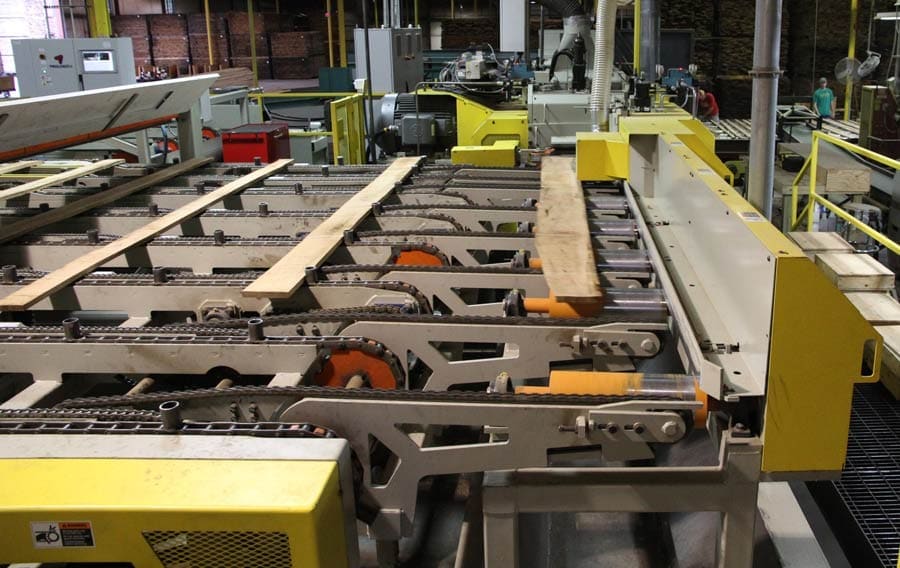
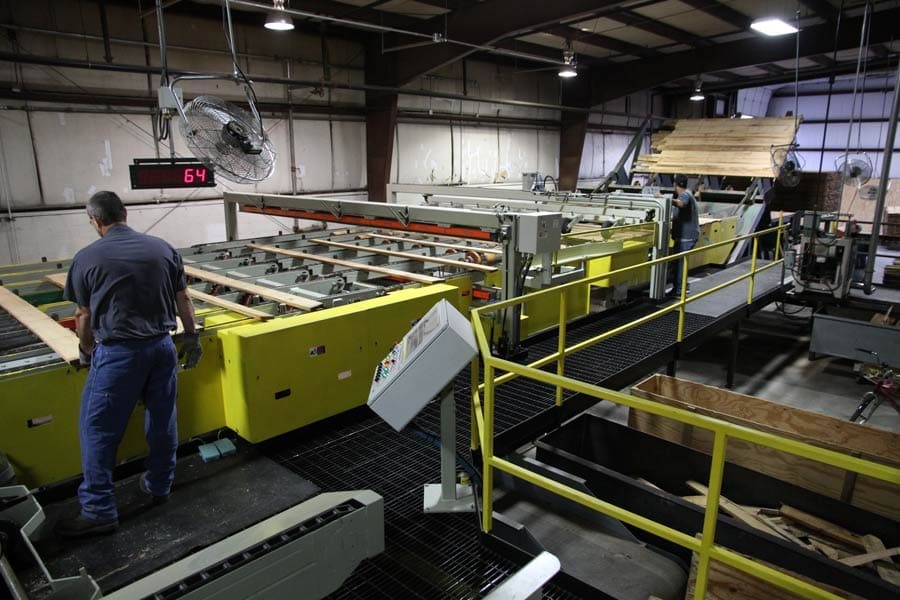
A DEL Series line starts with a scanner, not a saw. Every incoming board is measured, and the optimizer computes the highest-value combination of strips that board can produce. Servo-shifted moving blades then position themselves for that specific board, so the cut pattern changes board to board at full production speed.
DEL blades cut a thin kerf of roughly 0.140 inch, and kerf is worth being precise about. The rule of thumb you will hear quoted, one to two percent recovery for every 0.010 inch, comes from log sawing, where a thinner cut also makes the side boards longer and wider. Ripping a board is a tighter piece of arithmetic than that. What you save is one strip width plus one kerf, so on typical flooring strips the honest figure is closer to half a percent per 0.010 inch, and it lands as a whole extra piece on some boards and nothing on others rather than as a smooth percentage across the run.
That is worth having and it is not where the yield on this line comes from. The recovery comes from the scanner and the moving blades deciding where to rip. Published work on rough mills has measured operators running fixed patterns capturing somewhere between 62 and 78 percent of the value a board was actually carrying, and the gap closes as the saw learns more about the board in front of it.
That is also why the yield number moves before the volume number does. A small change in where a board is ripped changes which grade the pieces fall into, and grade is what you are actually paid for.
Lines are built around your products: flooring strips, mouldings, dimension components or window stock. Options include automatic edging removal, automatic board flipping, text printing or color marking on pieces, bow busting, and curve sawing for boards with crook.
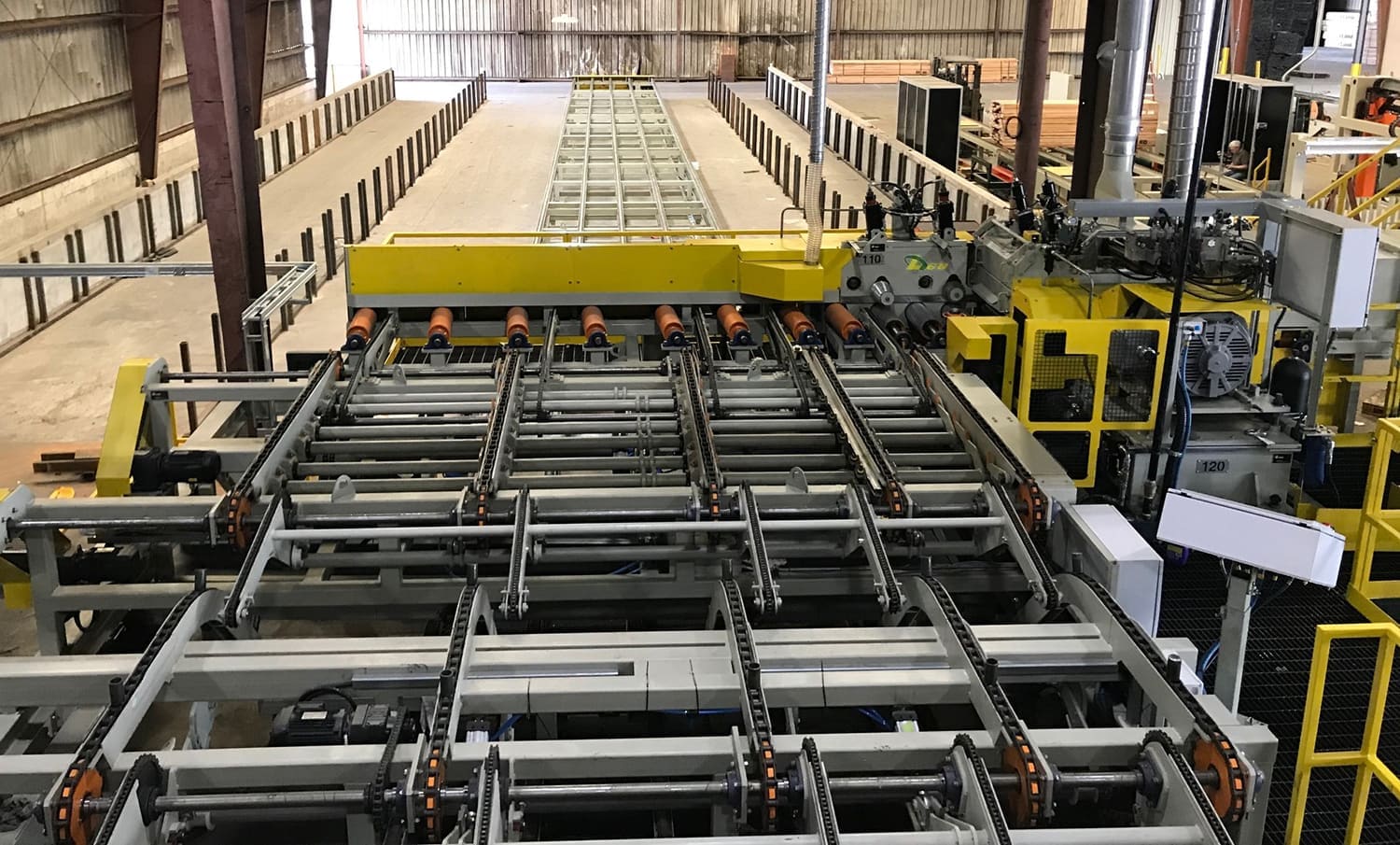
The frame is heavy-duty welded steel with machined housing for the pilot bearings. Feed rolls are chromed with a self-cleaning diamond head profile and driven by gear belts, and the press rolls run on 4 inch pneumatic cylinders with an integrated line bar and lateral press roll. Lubrication is centralized, the pneumatic piping is mounted with the hydraulic components, and every sensor lands in a junction box on the machine rather than a loom you have to trace.
Each line is built to the mill's requirements, then assembled and run at the plant before it ships, so it arrives user-ready rather than as a commissioning project.
| Capacity (4/4 lumber) | 20,000 to 90,000 board feet per shift |
|---|---|
| Feed speed | Up to 525 ft/min |
| Rip yield | Up to 93% at the ripsaw, with scanning optimization |
| Saw kerf | Thin kerf, approximately 0.140 in |
| Rip width accuracy | Very high rip width accuracy |
| Blade configuration | Moving-blade ripsaw, unique saw pattern per board |
| Scanning | Single-point, dual, or full 3D scanning |
| Frame | Heavy-duty welded steel frame with machined housing for pilot bearings |
| Feed rolls | Chromed feeding rolls with self-cleaning diamond head profile, driven by gear belts |
| Press rolls | 4 in dia. pneumatic cylinder on press rolls; integrated line bar and lateral press roll |
| Lubrication | Centralized lubrication |
| Pneumatics and hydraulics | Pneumatic piping mounted with hydraulic components; high quality mechanical components |
| Safety | Heavy-duty safety guards; all sensors connected to junction boxes mounted on the machine |
| Commissioning | Manufactured to your specific requirements, rigorously assembled and run at the plant so the line is user-ready on arrival |
| Applications | Flooring, moulding, components and window stock |
| Options | Automatic edging removal, automatic board flipping, text printing or color marking, bow busting, curve sawing |
Specifications vary by configuration. Every line is engineered to the mill, so request numbers for your application.
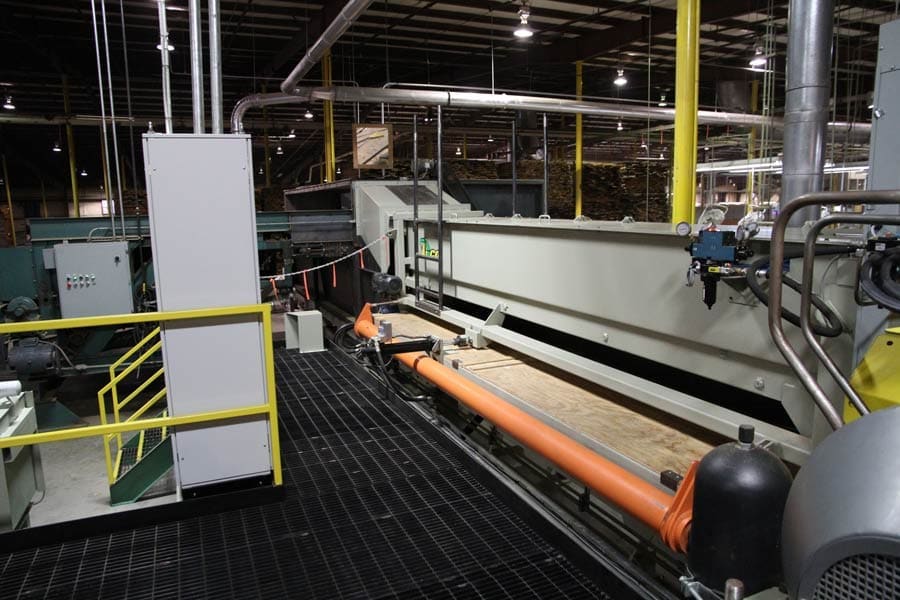
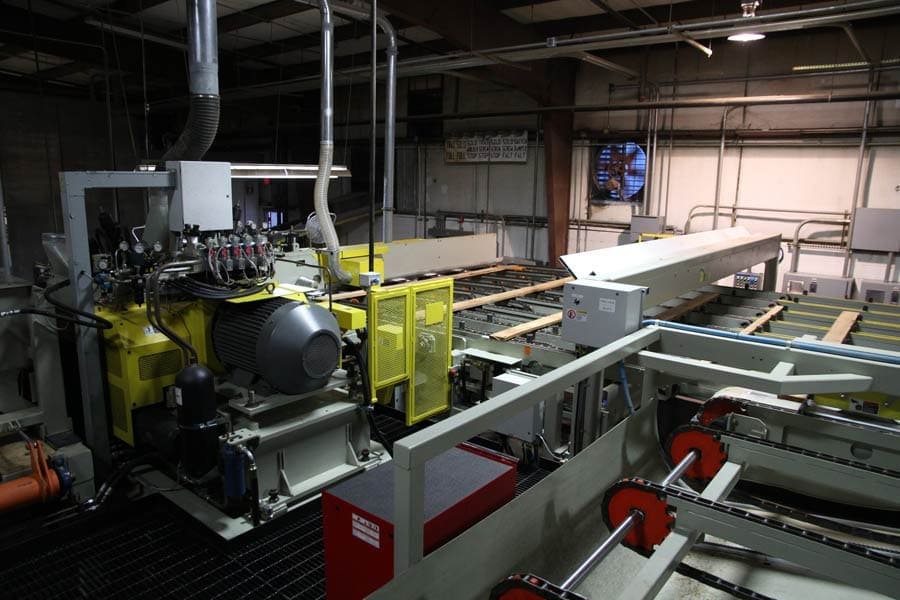
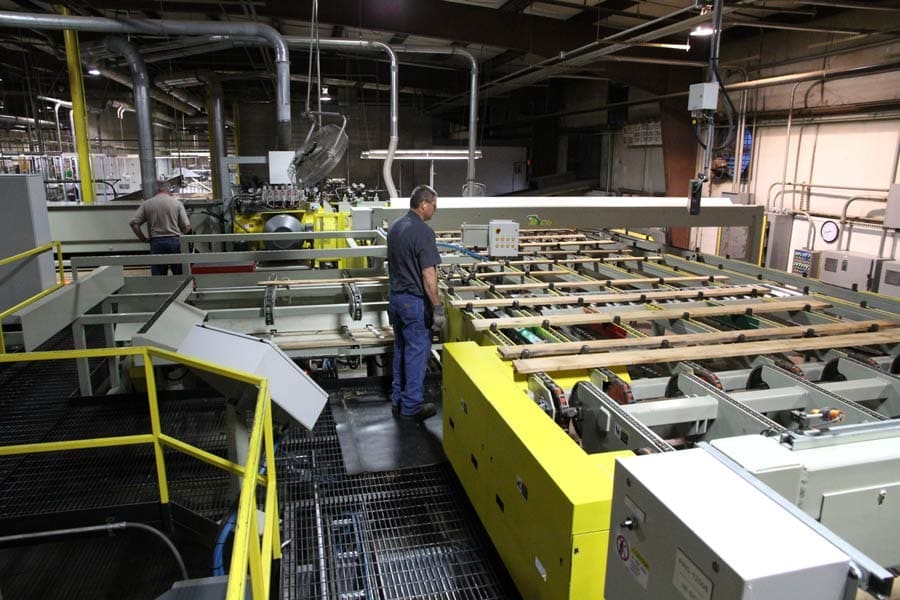
Mills rarely buy one machine. These are the systems that most often go in with a optimized ripping, and quoting them together is how the handoffs get engineered before anyone orders steel.
Grades and values every board first
View system →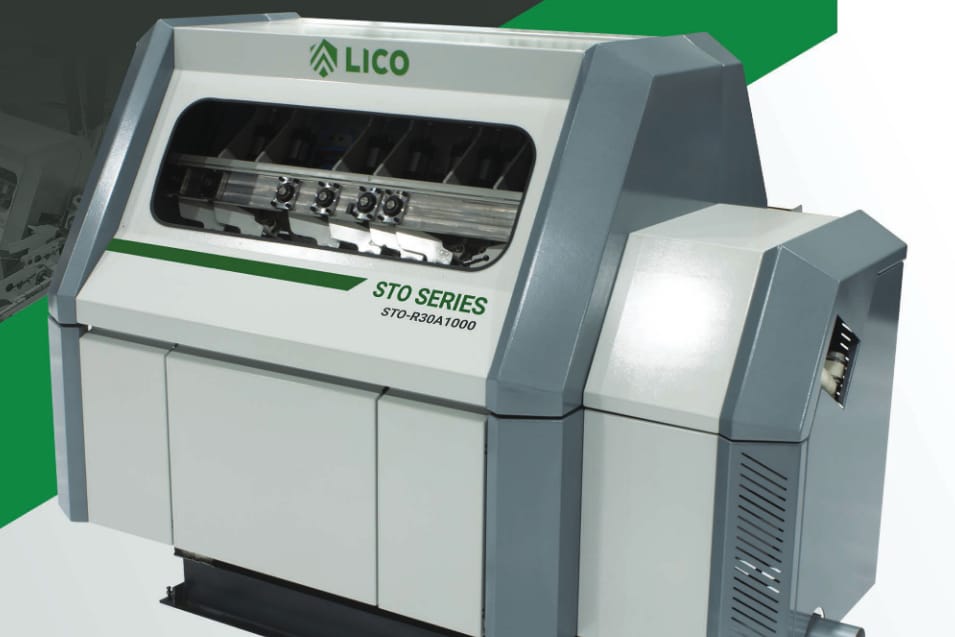
Crosscuts what the rip line produces
View system →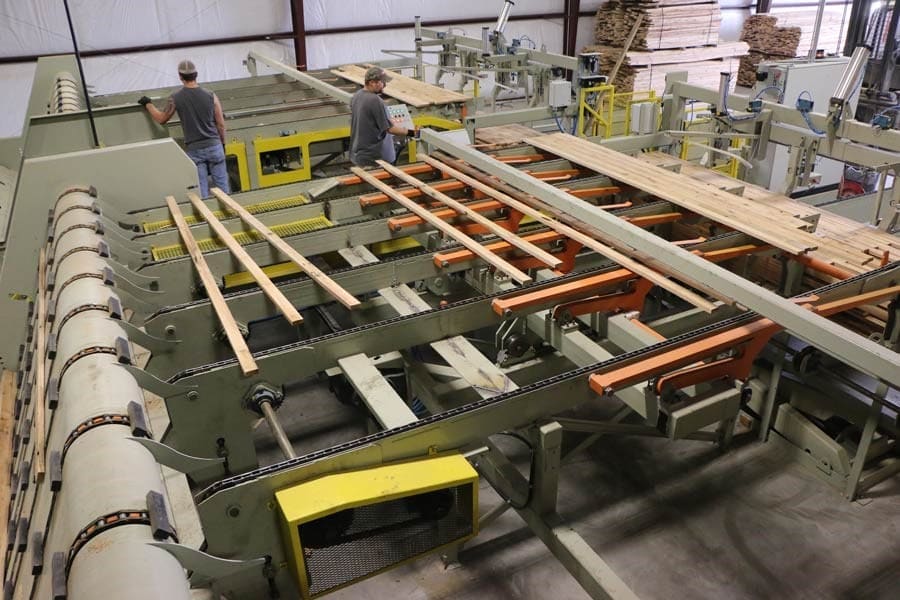
Takes the output off the end
View system →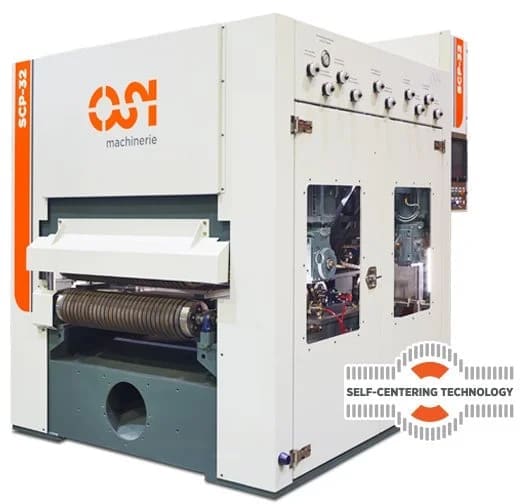
Planes to final thickness
View system →We are the manufacturer's own U.S. representative, so the engineering answers come from the people who build the machine and you reach them through one number.
We quote and support installations across the United States, from the Southeast to the Pacific Northwest.
Ripping, edging, scanning, sorting, stacking and waste handling on one quote, with the handoffs between them worked out before you order.
Configurations cover 20,000 to 90,000 board feet of 4/4 lumber per shift, with feed speeds up to 525 feet per minute. The line is sized to your infeed, your products, and your shift structure.
Each board is scanned and the blades shift to cut a unique pattern for that board instead of forcing every board through fixed spacings. Lico publishes rip yields up to 93 percent, measured at the ripsaw on the lumber fed to it. A whole rough mill measured end to end comes in lower than that, because the chop saw takes its share downstream.
Single-point, dual, or full 3D scanning, depending on how much defect and geometry information you want driving the optimization.
Ripping lines are engineered to order, so pricing follows a short scoping conversation about your capacity, products, and plant layout. Call 615-948-9983 or use the contact form and we will come back with numbers from the builder.
Sizing, options, budget numbers and lead times, in one conversation.