The builder's own engineering
We are the manufacturer's own U.S. representative, so the engineering answers come from the people who build the machine and you reach them through one number.

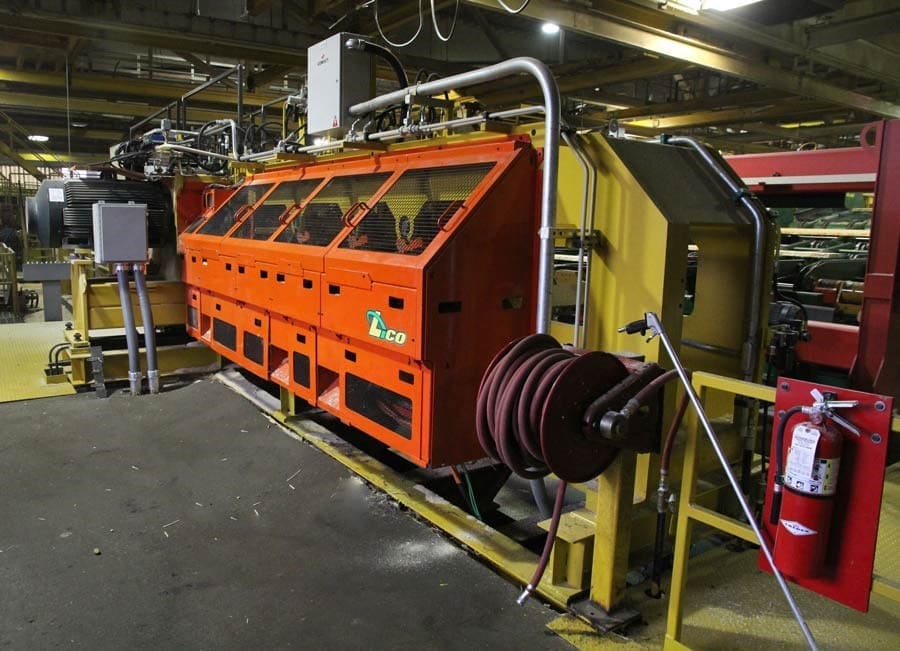
Lico ADM and ADMS optimized board edgers put servo-positioned edging behind a scanner, processing up to 60 boards per minute with board gaps as low as 0.6 seconds. Built for hardwood and softwood mills that live on recovery.
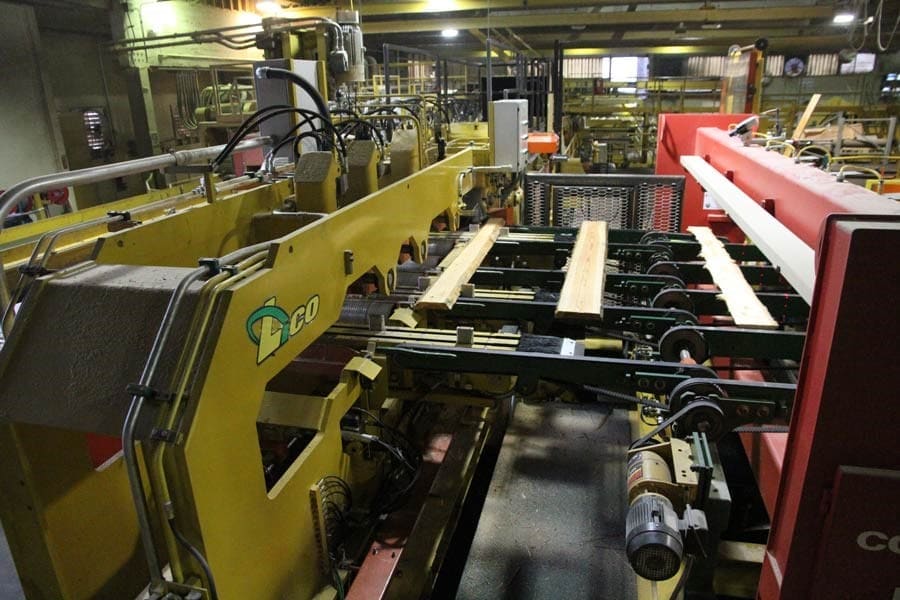
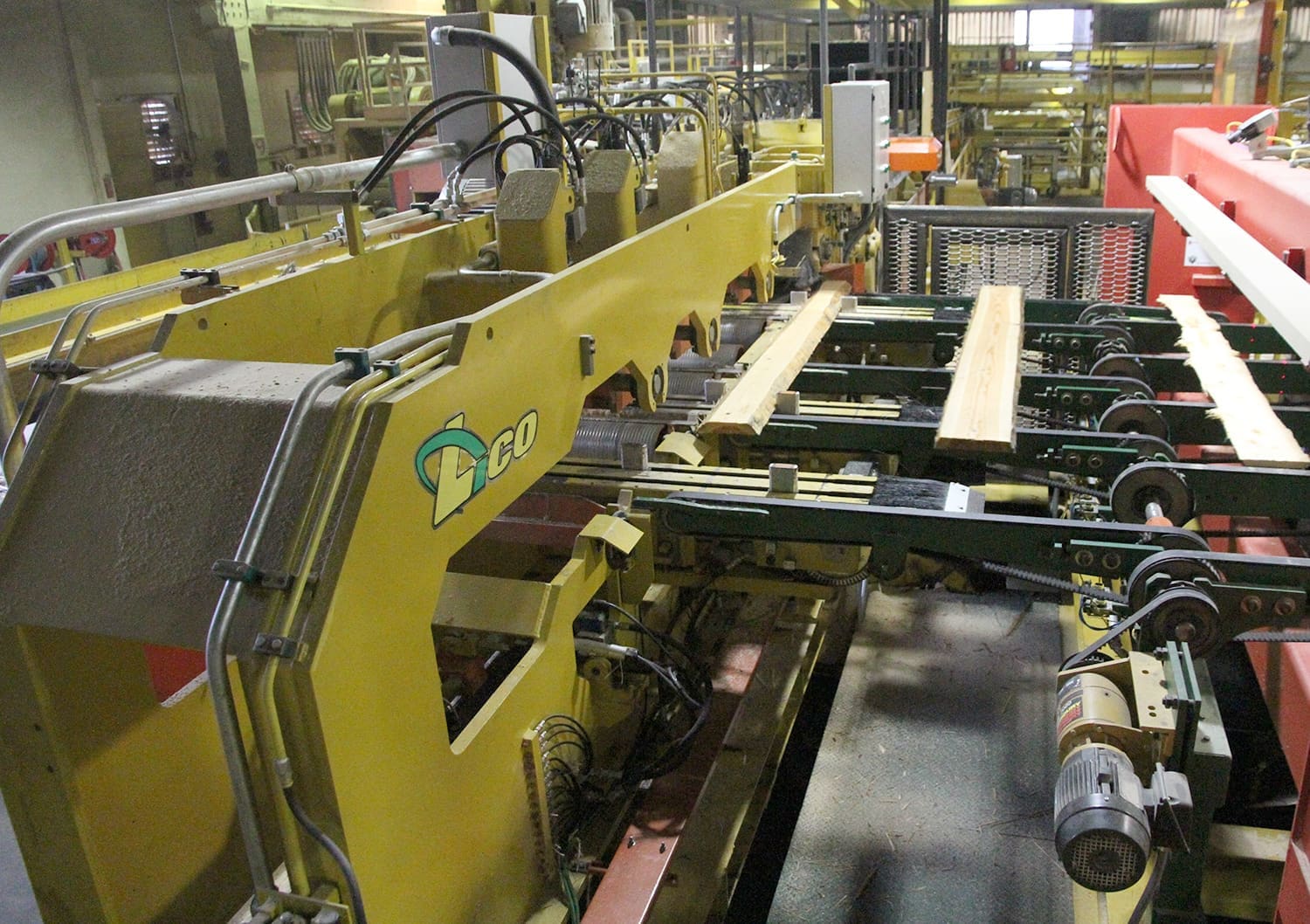
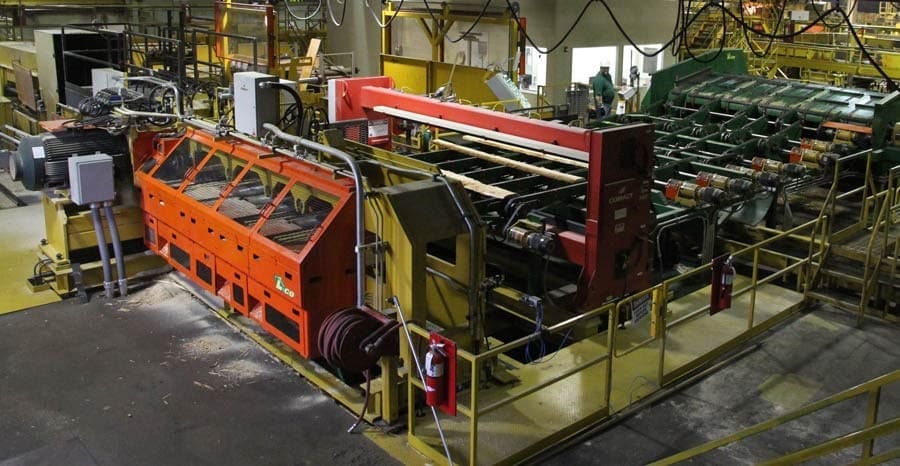
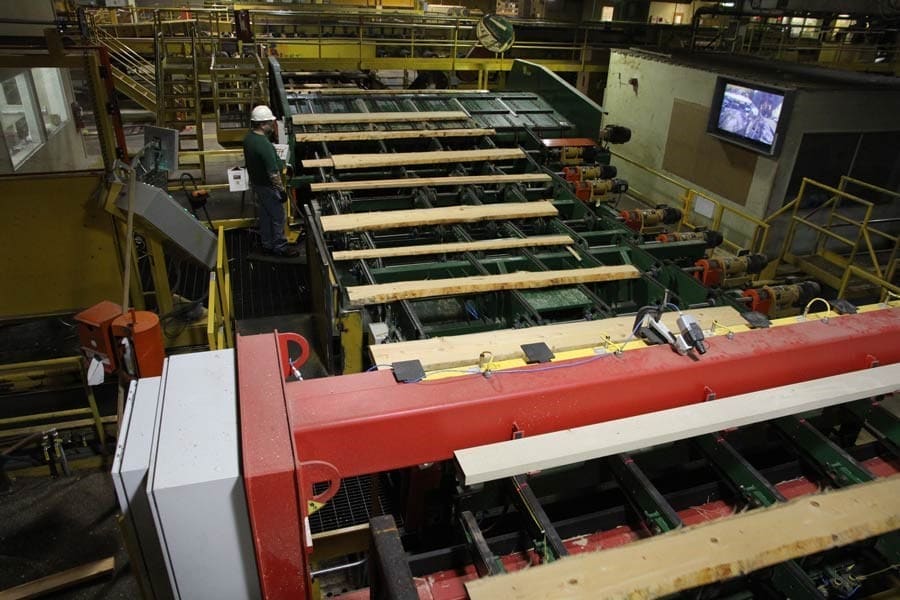
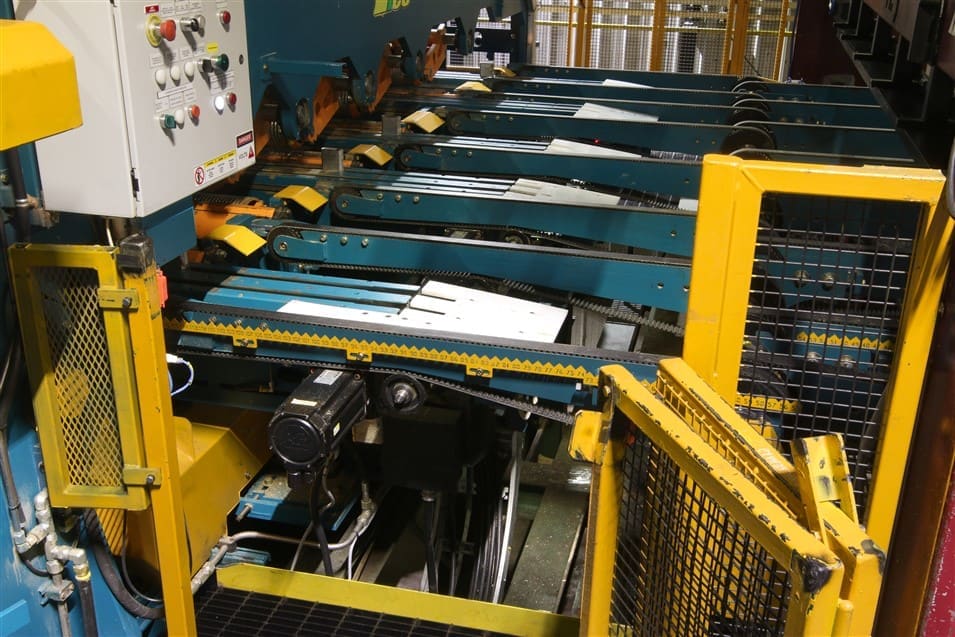
An ADM line scans each flitch, computes the edging solution, and positions the piece with servo-controlled belts and patented positioning modules while it is still moving. Rolls pre-position by servo cylinder before the piece arrives, and pneumatic air-bag springs hold pressure on the product as thickness changes, which is what keeps vibration out of the pivots. Lico holds two patents on the approach, CA 2,926,562 and US 9,415,950 B1.
Lico's own description of what those patents buy is easy to skim past: the line processes up to 60 boards per minute while keeping the lowest possible feed speed at the board edger. That is worth slowing down on, because it separates two numbers that get treated as one. Feed speed is how fast wood travels through the saw, and every mill knows what happens to a cut when you push that. Piece rate is how often the next board shows up. You raise the second by shrinking the space between pieces rather than by running the wood harder, and Lico's figure for that space is a gap as low as 0.6 seconds, held by keeping every piece in continuous motion instead of starting and stopping it.
Two honest qualifiers on the 60. It is calculated on 8 foot flitches, and a longer flitch means fewer pieces through the machine in the same minute, so quote the rate and the length together or neither tells you much. And the medium-speed configuration at around 30 pieces per minute is the one Lico describes as well suited to many hardwood sawmills, which is to say the headline number is not the one most hardwood mills end up buying.
Taking flitches singly is what lets the machine decide separately for each one, and in hardwood that decision is worth more than the width it recovers. NHLA grades are yield thresholds: FAS asks a board to yield 83-1/3 percent clear cuttings, No. 1 Common 66-2/3 percent, and No. 2A Common 50 percent up to the point where No. 1 Common starts. A board sitting just under a threshold is worth materially less than the same board just over it, and edging moves both the surface measure and the clear-cutting yield at once. That is the calculation the optimizer is running while the piece is in motion.
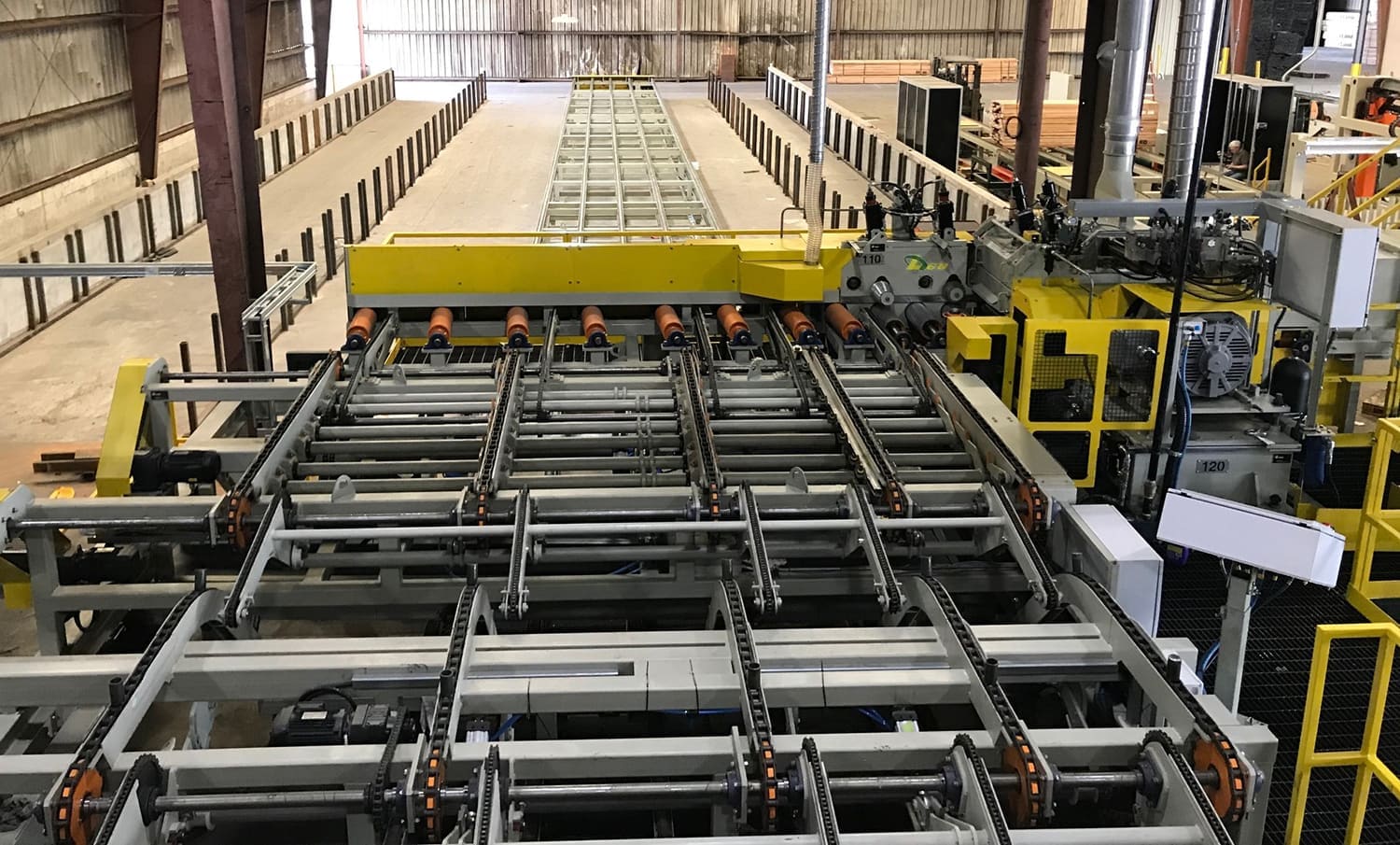
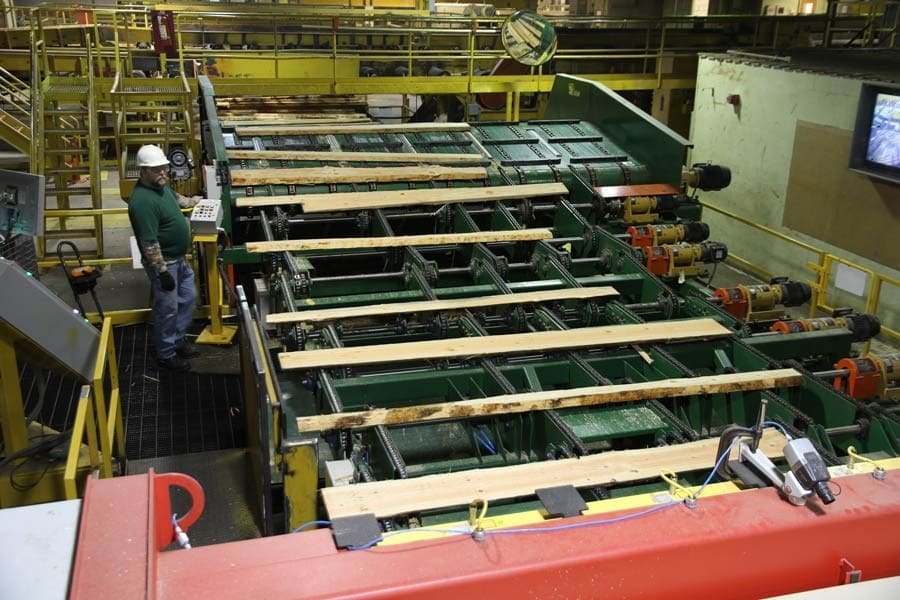
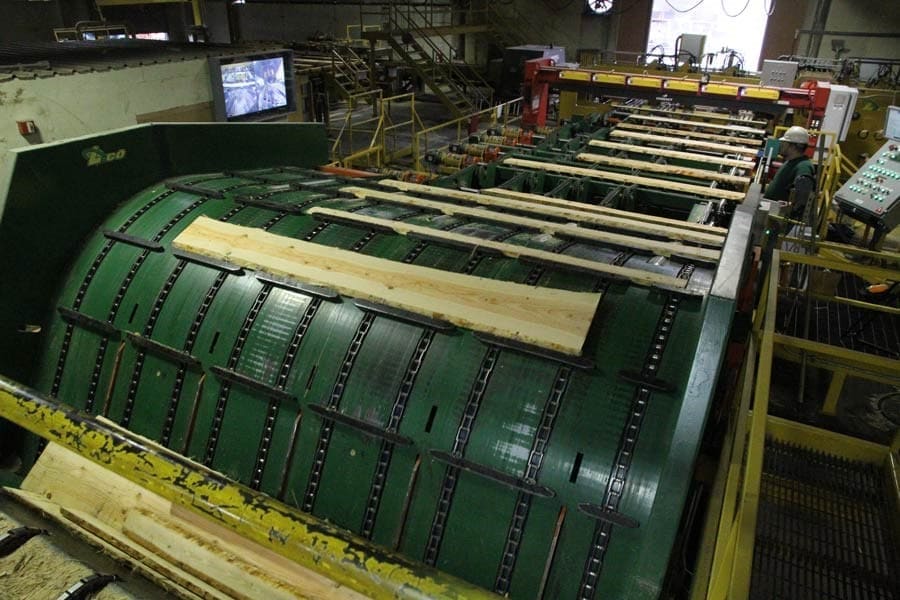
Ahead of the saw, the reverse-angle camel-back unscrambler and lugless staging transfers turn a rough deck into a steady, singulated flow with the ends already lined up. This is the part of the quote that gets trimmed first and then explains the gap between the rated speed and what the line does at the end of a shift: a saw can only edge the boards that arrive properly presented, on time, one at a time.
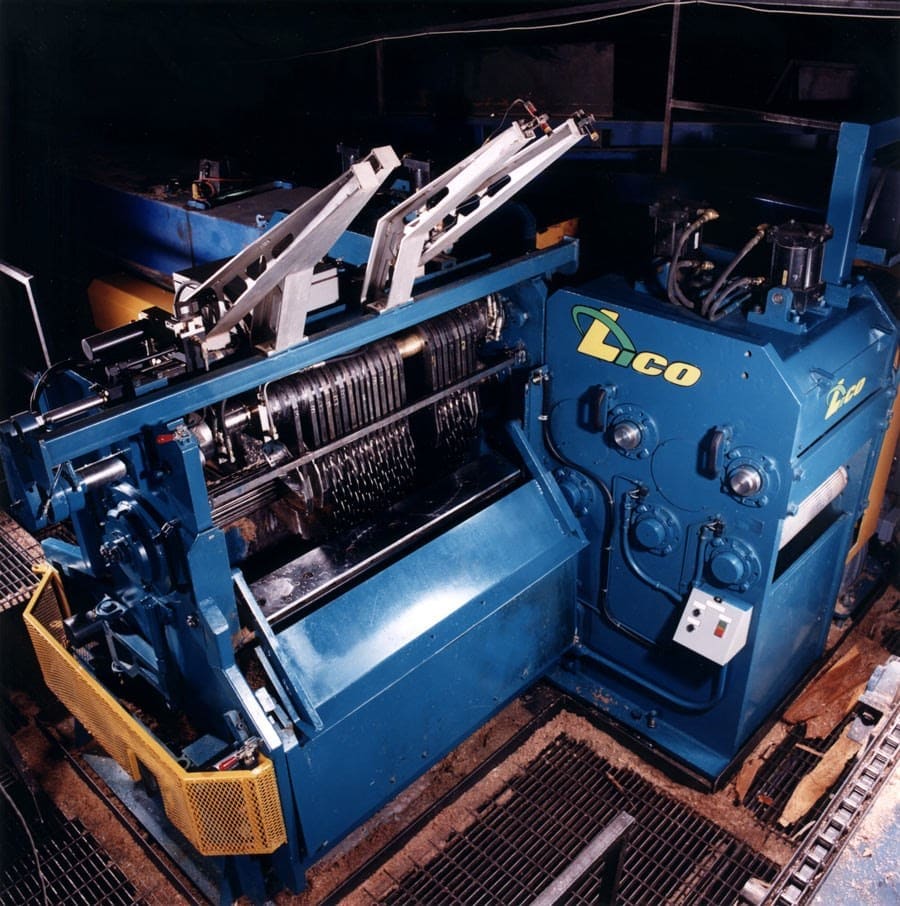
The machine itself is built on a monocoque frame that integrates the infeed and the saw box, with chromed feed rolls, spherical roller bearings and centralized lubrication. Hydraulics and pneumatics are mounted together, diagnostics are on board, and Lico specifies standard electronic components available on the open market, which is the kind of decision you appreciate at 2 a.m. on a production night.
| High-speed capacity | Up to 60 boards per minute on 8 ft flitches |
|---|---|
| Medium-speed capacity | Approximately 30 pieces per minute |
| Minimum board gap | As low as 0.6 seconds between pieces |
| Infeed | Modulated, automatic speed matched to piece dimension; continuous motion |
| Positioning | Servo-controlled positioning belts with patented positioning modules |
| Frame | ADM monocoque frame; heavy welded-steel construction |
| Material handling | Reverse-angle camel-back unscrambler, lugless staging transfers |
| Rolls and bearings | Chromed feed rolls, spherical roller bearings with centralized lubrication |
| Patents | Canadian patent CA 2,926,562; US patent US 9,415,950 B1 |
| Patented approach | Processes up to 60 boards per minute while keeping the lowest possible feed speed at the board edger |
| Board control | Full control of the boards from waiting position to sawing position |
| Press rolls | Servo positioned press rolls |
| Roll pre-positioning | Pre-positioning of rolls by servo-cylinders |
| Hold-down pressure | Air bag springs maintain pressure on the products, eliminating vibrations on the pivots |
| Saw box integration | ADM monocoque design integrates infeed and saw box for maximum accuracy and simplicity |
| Even-ending | Integrated even end line on the reverse angle camel back unscrambler |
| Medium-speed infeed | Cueing and scanning transfer using pin stops |
| Medium-speed application | Well suited to many hardwood sawmills |
| Operator workload | Pieces are in constant motion, reducing the feeding transfer speed and easing operator workload |
| Optimization and controls | Comact optimization and controls |
| Testing before shipment | Optimization and controls entirely tested at the plant |
| Diagnostics | Complete diagnostic system reducing downtime to a minimum |
| Pneumatics and hydraulics | Pneumatic piping completely mounted with hydraulic components |
| Electrical components | Standard electronic components available on the market |
| Maintenance | Fewer moving parts and reduced maintenance |
Specifications vary by configuration. Every line is engineered to the mill, so request numbers for your application.

Mills rarely buy one machine. These are the systems that most often go in with a optimized board edger, and quoting them together is how the handoffs get engineered before anyone orders steel.
We are the manufacturer's own U.S. representative, so the engineering answers come from the people who build the machine and you reach them through one number.
We quote and support installations across the United States, from the Southeast to the Pacific Northwest.
Ripping, edging, scanning, sorting, stacking and waste handling on one quote, with the handoffs between them worked out before you order.
High-speed configurations process up to 60 boards per minute, a figure Lico calculates on 8 foot flitches. Piece rates fall as flitches get longer, so the number only means something with the length attached. Medium-speed configurations run around 30 pieces per minute, and Lico rates that variant as well suited to many hardwood sawmills.
They are two different numbers. Feed speed is how fast wood moves through the saw, and pushing it harder costs you cut quality. Piece rate is how often a board arrives. Lico's patented approach raises the second while keeping the first as low as possible, by holding the gap between pieces down to 0.6 seconds and keeping everything in constant motion.
The infeed is modulated: feed speed automatically adjusts to each piece's dimensions in continuous motion, with servo-cylinder roll pre-positioning ahead of the piece. That is how the line holds tight gaps without sacrificing positioning accuracy.
Both share the monocoque frame and servo positioning platform; the model fit depends on your speed and optimization requirements. We will match the configuration to your mill during scoping.
Yes. The reverse-angle camel-back unscrambler and lugless staging transfers are designed to take rough decks and deliver singulated, positioned flitches, with an even end line integrated into the unscrambler.
Sizing, options, budget numbers and lead times, in one conversation.