The builder's own engineering
We are the manufacturer's own U.S. representative, so the engineering answers come from the people who build the machine and you reach them through one number.

Machinerie Lico Inc. has designed and built optimized ripping, edging, crosscut and stacking lines in Saint-Georges, Quebec since 1993. Nothing ships from a shelf: the controls are coded to your product mix, the steel is cut to your building, and the line is assembled and run at their plant before it leaves. US Machinery Sales is the U.S. sales partner Lico names on its own site.
Lico has been in Saint-Georges, Quebec since 1993, and in their own words they have spent over thirty years on the design and manufacture of sawmill and wood processing equipment and nothing else. That focus is the reason a Lico line tends to fit a building rather than approximately fit it. The company describes its own approach as optimization and adapted solutions, and both halves of that are literal: the optimization is scanning and computer-decided cutting, and the adaptation is that the machine is drawn around your plant.
The range they name is edgers, trimmers, lumber handling and stacking systems, supplied both as standalone machines and as integrations into a sawmill that is already running. They build for plants across North America and Europe from a shop of eleven to fifty people, which is the size where the person who engineered your line is still reachable.
Every line is assembled and run at their plant before it ships. For a mill owner that matters more than it sounds, because the alternative is finding out on your own floor, with your own crew standing around, that two sections do not agree with each other.
Search for the bare company name and the first result is usually a CNC lathe manufacturer in Taichung, Taiwan trading as Lico Machinery Co. Ltd, founded in 1979. They are a completely separate business and we have no connection to them.
The company on this page is Machinerie Lico Inc., Saint-Georges, Quebec, founded 1993, at licoinc.net and on LinkedIn as Lico Machinery Inc. The two names sit side by side even there, where the Taiwanese company appears separately as Lico Machinery Co., Inc. If you arrived here looking for a lathe, you are in the wrong place. If you arrived looking for a rip line, you are in the right one.
An optimized machine scans the piece in front of it and lets a computer choose the cut. A non-optimized machine runs the setting it was given. Both are real products and Lico sells both, which is why the word is worth using precisely rather than as decoration.
On a rip line the difference shows up as recovery. A fixed-blade line forces every board through the same spacings, so the board that would have yielded seven strips gives you six and the difference goes out as offcut. A DEL line scans each board and cuts a pattern for that board. Lico publishes rip yields up to 93 percent, measured at the ripsaw on the lumber fed to it. Logs are the large majority of what it costs to run a mill, which is why recovery beats labor savings on almost every payback calculation we are asked to run.
The same logic runs through the range. The board edgers position with servos behind a scanner. The crosscut line defects to length against a grade solution rather than a mark. The merchandising line scans and cuts for the highest-value combination it can find in the piece.
Machinery is a walk-the-floor business. Layout constraints do not show up on a drawing, so scoping starts with a visit: we travel to the plant, walk the flow, and measure what the building will actually take. From there Lico's own application engineers configure the line and the numbers come back through one contact.
Installation downtime is the question that follows price, and it is a fair one. It is measured in weekends rather than weeks on a station swap, and that is the sort of thing to pin down early, in the same conversation as payback.
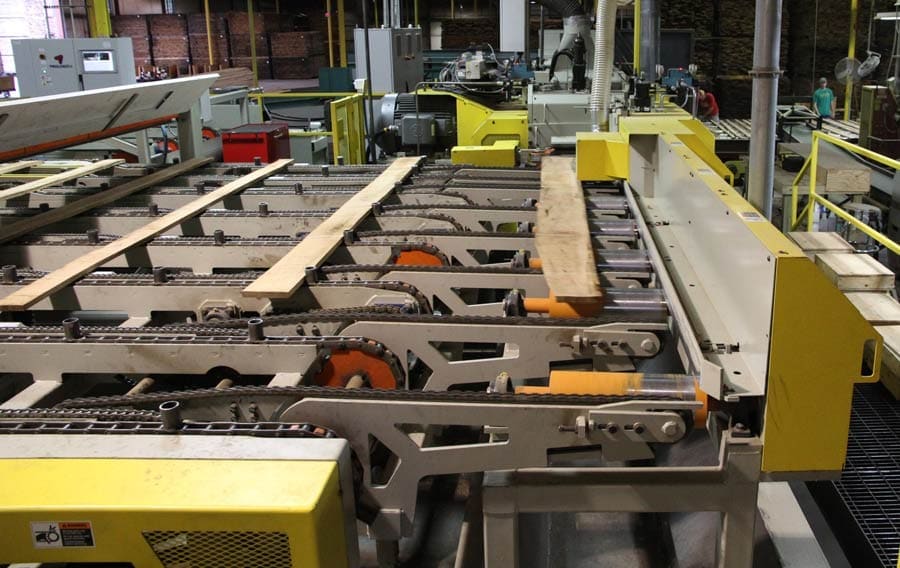
Up to 90,000 bd ft per shift at up to 93% rip yield
View system →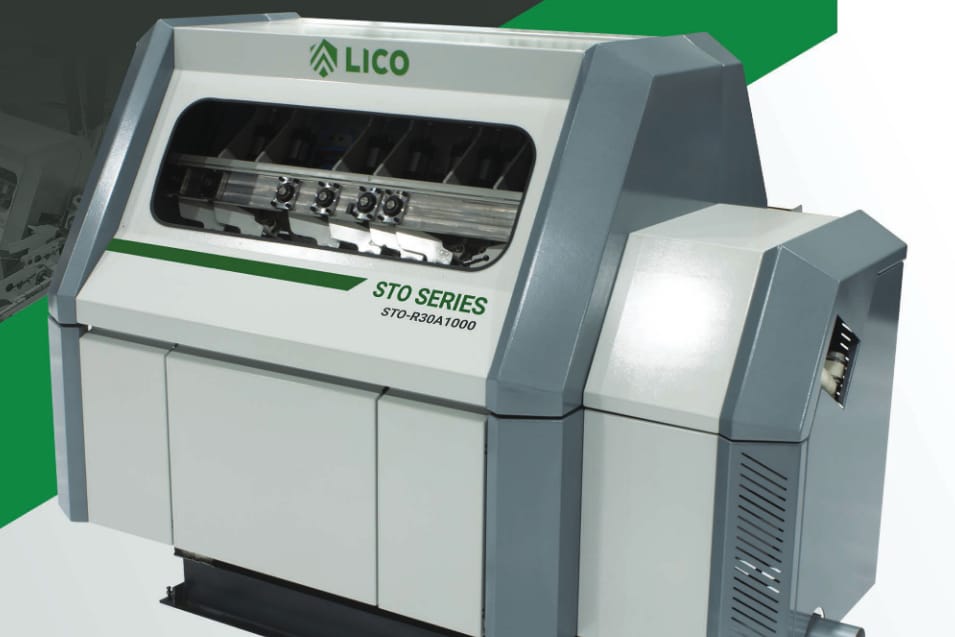
Optimized crosscutting at up to 1,000 ft/min with a 125 ms saw stroke
View system →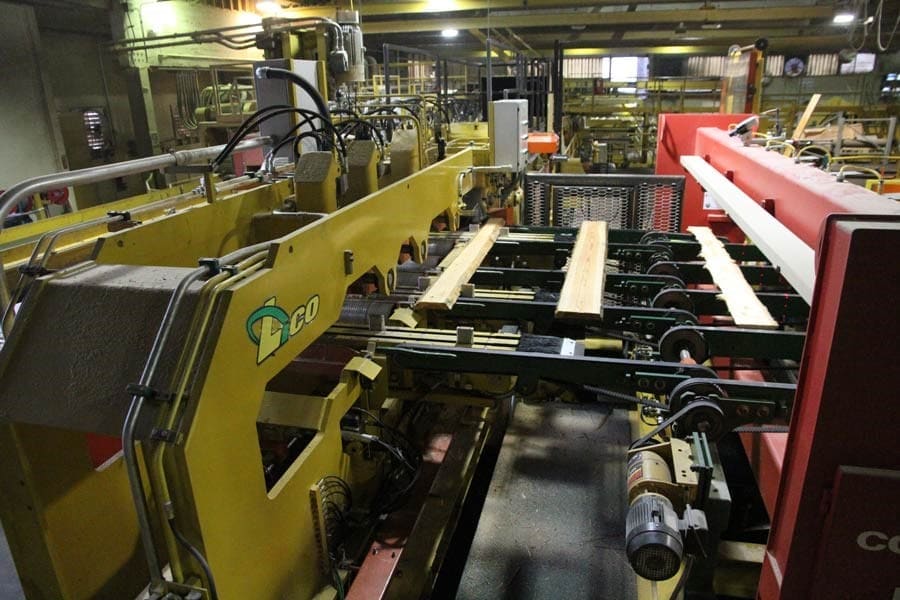
Optimized edging at up to 60 boards per minute
View system →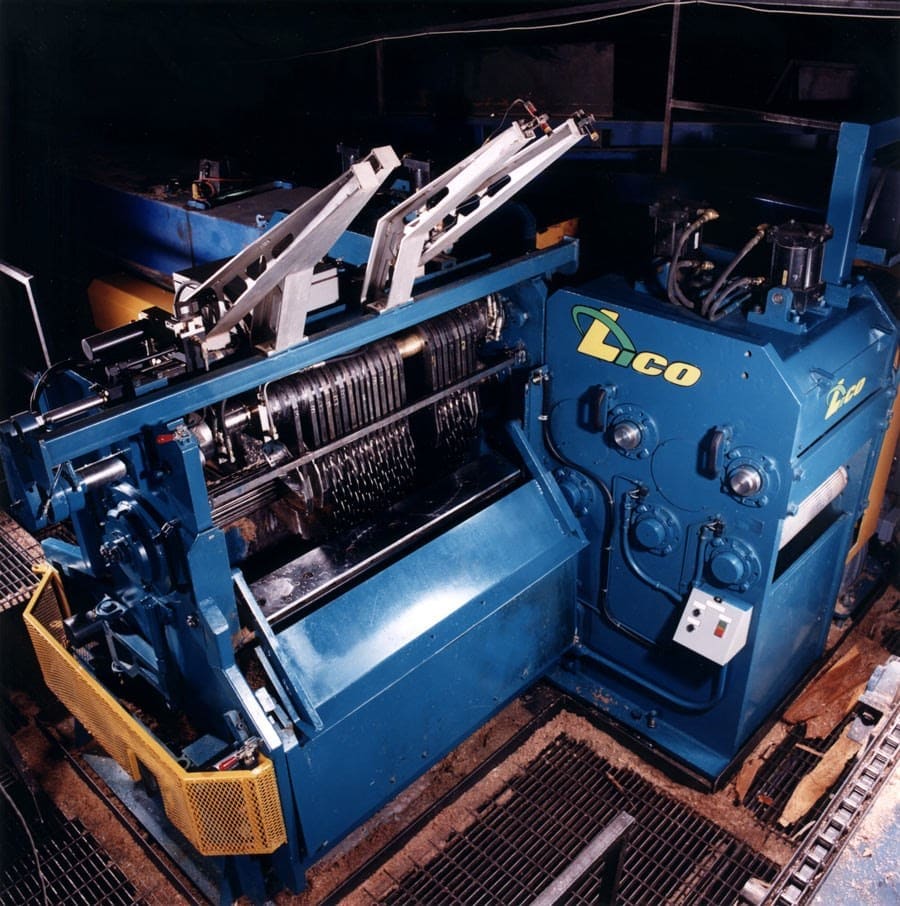
Feed speeds from 60 to 600 ft/min, manual to fully automatic
View system →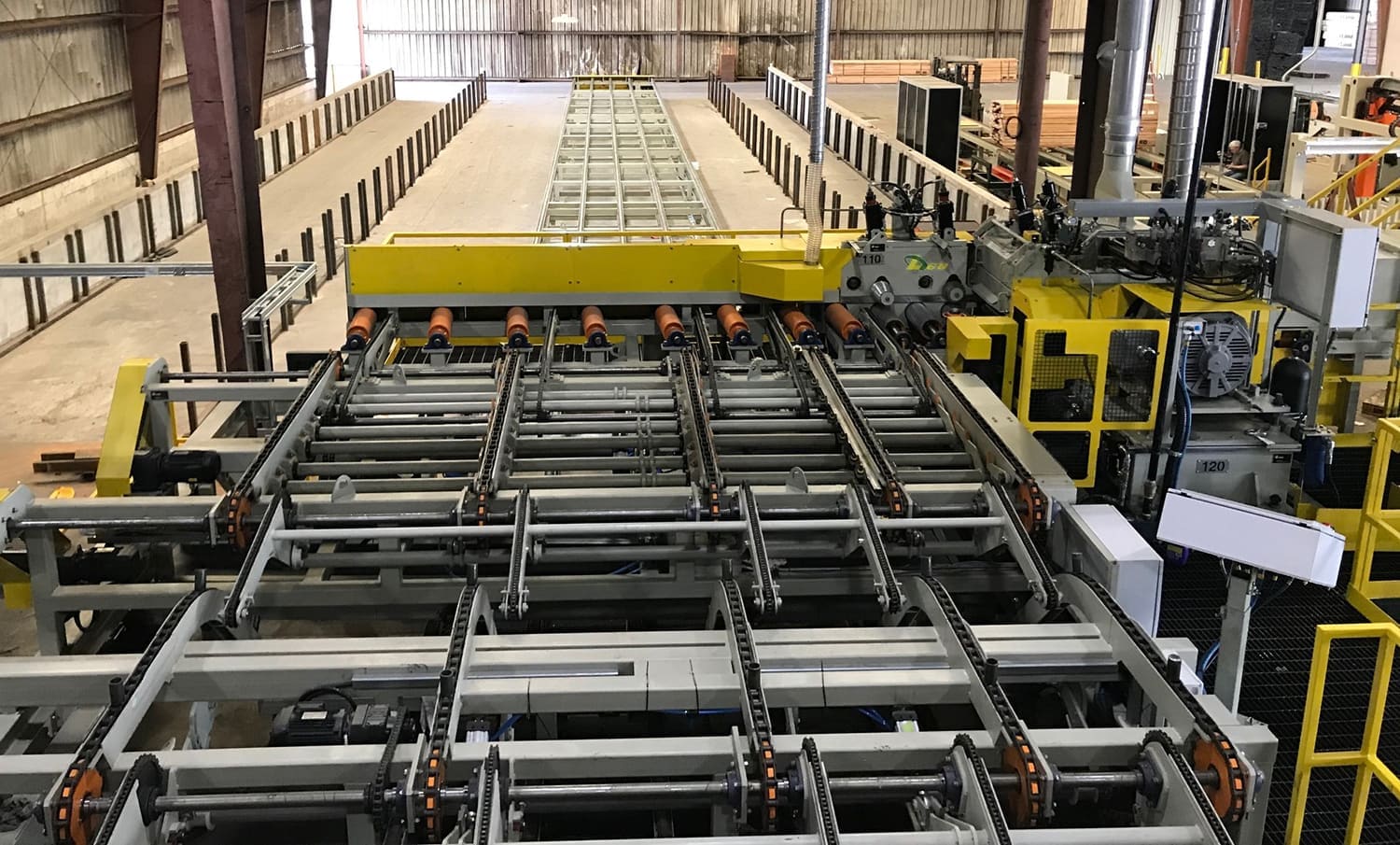
Scans every board and cuts the highest-value combination
View system →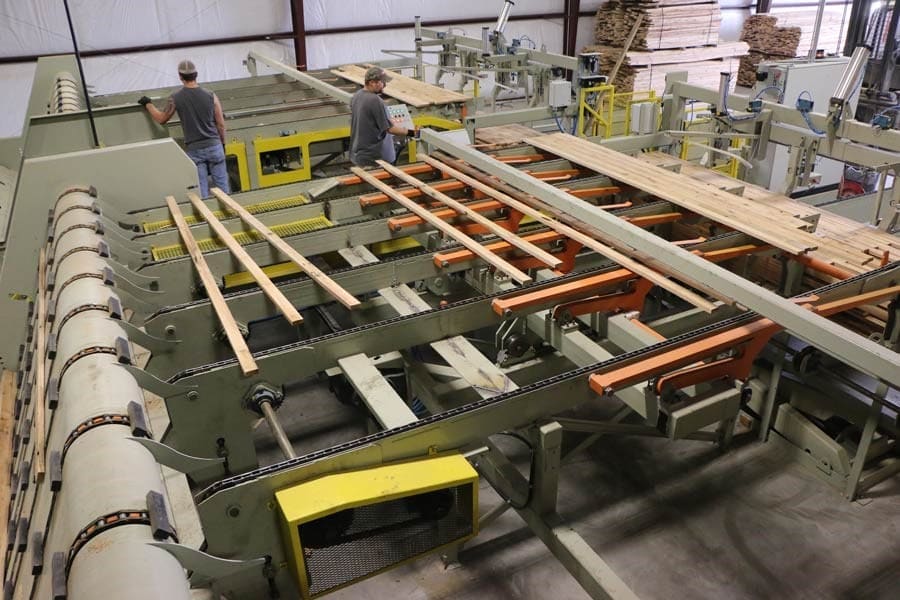
Stick-free strip stacking and custom lumber stackers
View system →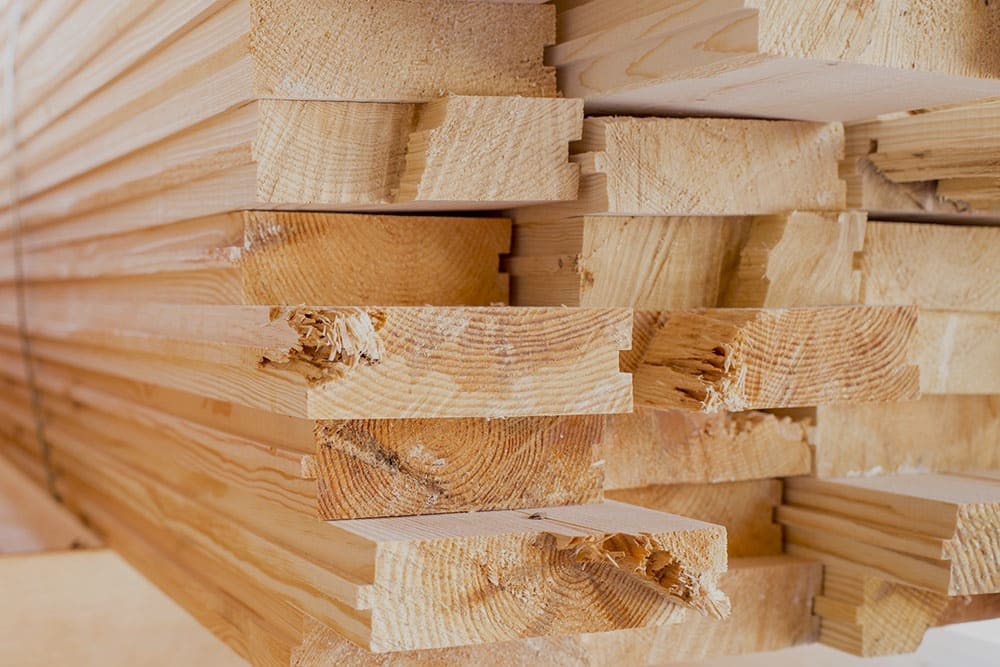
140 pieces per minute into up to 50 simultaneous sorts
View system →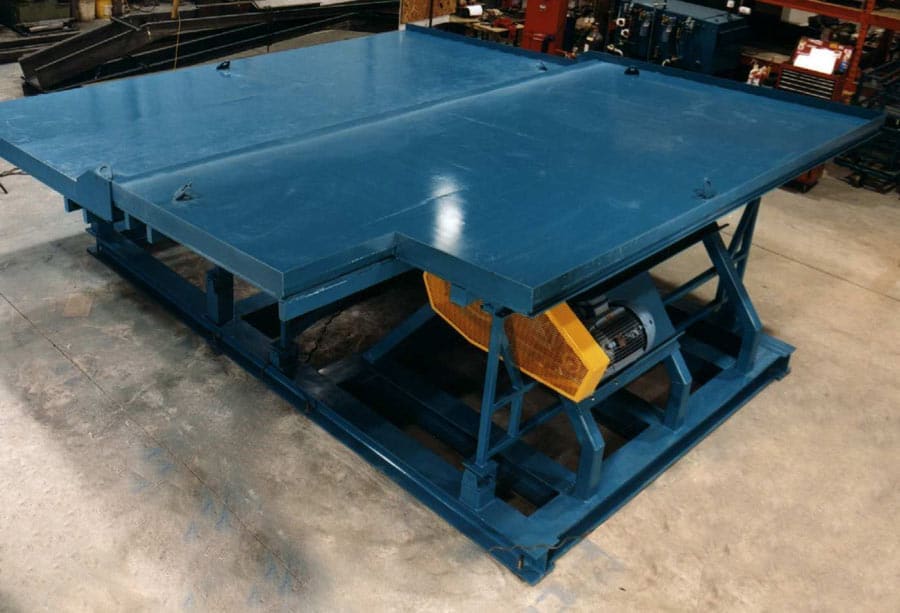
Quiet, low-maintenance lateral waste transfer
View system →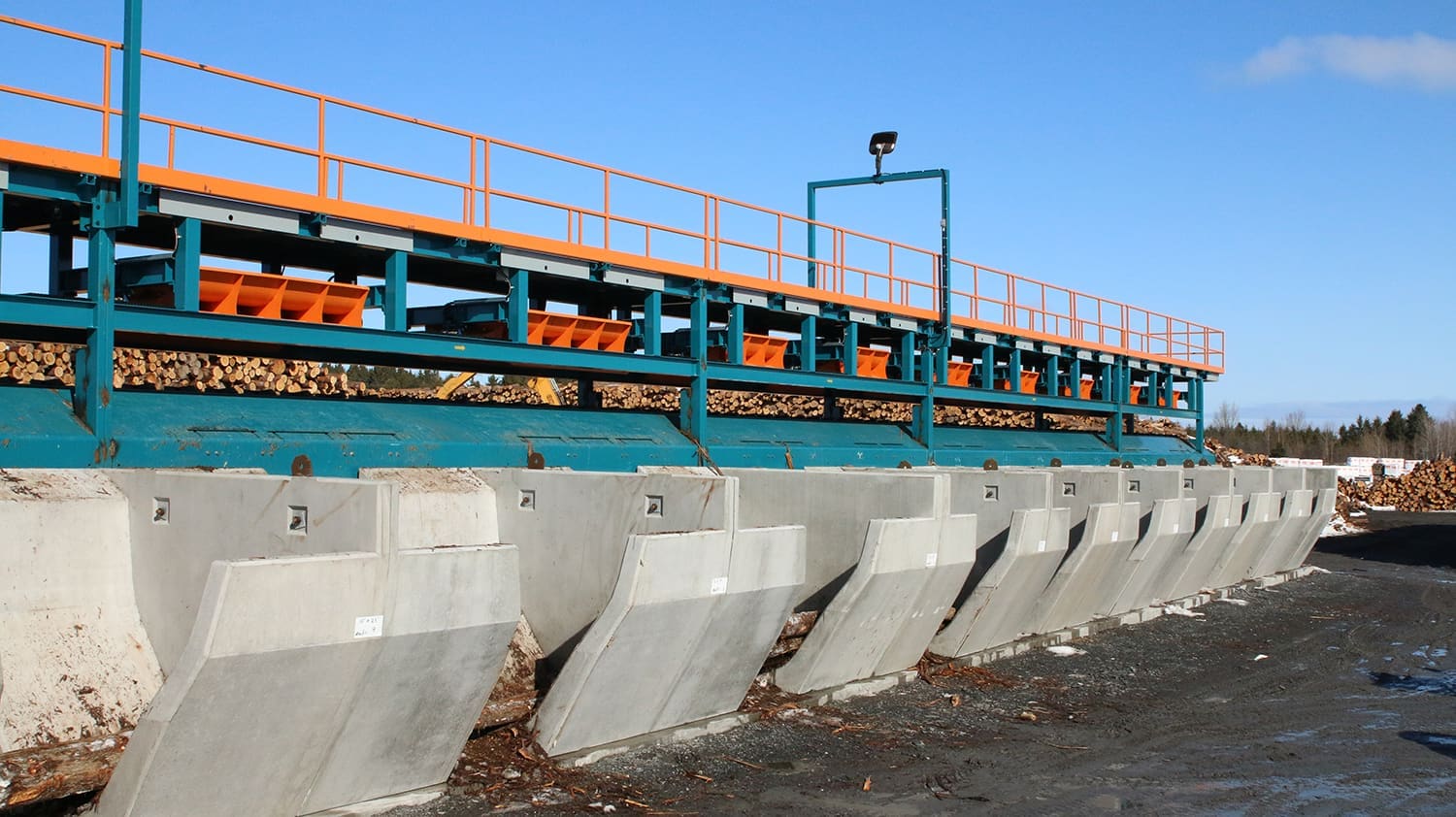
One-off machines engineered for your line
View system →| Series | System | Where it sits in the line |
|---|---|---|
| DEL | Optimized ripping systems | Dry end. Scans each board and cuts a pattern for it |
| ADM / ADMS | Optimized board edgers | Behind a scanner, edging board by board |
| DEB | Optimized gang edgers | Green or dry end, fixed-width gang ripping |
| STO | Optimized scan and crosscut | After the rip line, defecting to length |
| Grading lines | Optimized merchandising systems | Scans and cuts the highest-value combination |
| CLA | Optimized bin sorter | Sorts finished pieces into bins by grade or size |
| EMP / EML | Optimized stacking systems | Back end, stick-free strip and lumber stacking |
| DES | Tilt hoist | First machine in the building, unstacking to the line |
| Engineered to order | Optimized custom designs | Wherever nothing standard fits |
Configurations vary by mill. Ask which one fits your line.
Lico covers the length of a hardwood flooring plant or a sawmill's dry end on its own, from the tilt hoist that opens a stickered package through to the stacker that closes the line. That is why most conversations start here and widen out.
The handoffs are where the money is lost, so they get engineered before anyone orders steel. An EBI optimizer running on Lico equipment is a normal configuration in the plants we serve, and Lico lists EBI, OSI Machinerie and Cresswood among its own supplier partners.
In practice a line reads left to right: Lico moves and cuts the lumber, EBI grades and scans it, OSI planes it to thickness, and Cresswood takes what comes off the floor at the end. One quote covers all four, which is the thing a direct-sales manufacturer cannot do without pulling in three business units.
We are the manufacturer's own U.S. representative, so the engineering answers come from the people who build the machine and you reach them through one number.
We quote and support installations across the United States, from the Southeast to the Pacific Northwest.
Ripping, edging, scanning, sorting, stacking and waste handling on one quote, with the handoffs between them worked out before you order.
No, and this is the most common mix-up in search. The company we represent is Machinerie Lico Inc. of Saint-Georges, Quebec, founded 1993, which builds sawmill and hardwood flooring equipment. Lico Machinery Co. Ltd of Taichung, Taiwan is an unrelated CNC lathe manufacturer founded in 1979. If you are looking for a lathe, we cannot help you.
US Machinery Sales, LLC. Lico lists us as its sales partner on its own website. Call Mike Rose on 615-948-9983 and the engineering answers come back from Lico's own application engineers.
It means a scanner reads the piece and a computer decides the cut, rather than the piece being forced through a fixed setting. It is a real configuration and a priced one: Lico sells optimized and non-optimized infeeds on the gang edgers, so it is worth being specific about which you are quoting.
Yes, and most jobs start that way. A single station gets added to an existing line far more often than a whole plant gets bought at once. The scoping conversation is about what feeds it and what it feeds.
Yes. Beyond the systems listed here Lico builds material handling including tilt hoists and stacking-stick systems, and takes on custom work where nothing standard fits. If what you need is not on this page, ask.
Four builders, one contact. Each line picks up where the last leaves off, and most mills end up specifying two of them together.
Sizing, options, budget numbers and lead times, in one conversation.